Smallmouth Bass Fishing in Maine: Best Rivers, Techniques & Seasonal Tips

Published: November 17, 2026
Maine's glacial landscape has created some of the Northeast's most productive smallmouth bass waters, with clean rivers, rocky bottoms, gravel flats, and deep pools supporting strong populations. For anglers interested in smallmouth bass fishing in Maine, these waters offer more than scenic surroundings. They provide opportunities to target bass around current seams, boulder fields, ledges, and shallow feeding areas. The best results come from understanding how smallmouth respond to changing water temperatures, river flow, structure, and forage throughout the year. This guide covers the best Maine rivers and lakes for smallmouth bass, along with proven lure and fly techniques, seasonal patterns, tackle considerations, and practical tips for planning a productive fishing trip.
Maine's Best Smallmouth Waters: Where the Fish Set Up
Maine's rivers give smallmouth anglers plenty of water to explore, but productive fishing often comes down to understanding how bass use current, depth, and structure. The Penobscot, Kennebec, Androscoggin, and St. Croix each offer different combinations of these features, while Maine's lakes provide a quieter alternative to moving water.
Penobscot River
The Penobscot River is one of Maine's standout smallmouth fisheries, particularly through the stretch from Medway to Bangor. Its combination of rocky structure, moving water, and varied depths gives bass plenty of places to feed and hold.
- Where to look: Focus on current seams, boulder edges, deep pools, and areas where fast water meets slower water.
- How bass use it: Smallmouth often hold in protected water beside stronger current and move into the flow to intercept food.
- Fishing approach: Read the current and structure before casting instead of working only the visible shoreline.
Kennebec River
The Kennebec River between Madison and Waterville offers a mix of deep ledge pools, swift gravel runs, and changing current. These contrasting areas allow anglers to adjust their approach as bass move throughout the river.
- Key structure: Look for deep ledges and the downstream edges of rock formations where bass can sit out of heavy current.
- Feeding areas: Swift gravel runs can attract bass when insects, baitfish, and other forage move through the current.
- What to watch: Pay attention to transitions between deep, slower water and nearby fast runs.
Androscoggin River
From Rumford through Lewiston/Auburn, the Androscoggin features large boulder fields, deep current seams, and complex river structure. These conditions create numerous ambush points for smallmouth.
- Where to cast: Work boulder edges, current seams, and deeper pockets created by changes in the river bottom.
- Bass positioning: Fish can use large rocks to break the current while remaining close enough to intercept passing forage.
- Presentation tip: Vary your lure depth and retrieve speed when moving between slower pockets and stronger current.
St. Croix River
The St. Croix offers a more remote smallmouth fishing experience, with pristine water and strong numbers of aggressive fish. Its less-developed character also makes reading the river especially important.
- Best areas: Look for rocky structure, current breaks, eddies, and deeper holding water.
- Forage connection: Focus on places where current naturally pushes baitfish or other food toward waiting bass.
- Fishing approach: Adjust your presentation to the depth and current instead of using the same retrieve throughout a stretch.
Productive Maine Lakes
Not every smallmouth opportunity in Maine involves moving water. Big Lake, the Grand Lake Stream region, Messalonskee, and McGrath Pond offer lake environments where bass respond more to depth, structure, forage, and seasonal movement.
- Structure to target: Focus on rocky shorelines, drop-offs, gravel flats, points, and transitions between shallow and deep water.
- When to adjust: Bass may move shallow to feed during low-light periods and shift toward deeper structure as conditions change.
- River vs. lake: Without current to dictate positioning, anglers need to pay closer attention to depth, water temperature, and available forage.
Read the River: Three Places Smallmouth Bass Love
Finding smallmouth bass in a Maine river often comes down to reading how water moves around structure. Instead of fishing every piece of cover equally, focus on areas where current gives bass access to food without forcing them to fight the strongest flow.
River Seams and Eddies
A current seam forms where faster water meets slower water, creating a natural feeding lane for smallmouth.
- Where to cast: Cast across or slightly upstream of the seam so your lure or fly moves naturally through the transition.
- What to watch: Work the slower side first, then cover the edge of the faster current where bass can dart out to intercept passing forage.
Ledges and Drop-Offs
Rock ledges that cross the current create sharp changes in depth and flow. The downstream side can give bass a protected position with food moving toward them.
- Where to target: Focus casts along the downstream edge and any deeper pocket beside the ledge.
- Presentation tip: Keep your lure or fly close to the depth change where bass can ambush prey without sitting directly in heavy current.
Gravel Flats
Gravel flats become especially important during late spring and early summer as bass use these shallow areas for feeding and spawning.
- When to fish: Look for active feeding around warming shallow water, particularly when forage is present.
- Fish responsibly: Avoid disturbing active spawning areas and check Maine's current fishing regulations before targeting these areas.
Key takeaway: Look beyond structure itself. The most productive spots are where structure, current, depth, and available food come together.
Lures That Put Maine Smallmouth in the Boat
Maine smallmouth do not respond to the same presentation all day. When fish are holding tight to structure or moving slowly in cooler water, compact soft plastics can keep a bait in the strike zone. When bass are actively feeding, faster-moving lures allow anglers to cover more water and trigger reaction strikes.
When Bass Want a Slower Presentation
Use compact, subtle baits when smallmouth are holding deeper or feeding close to the bottom.
- Senkos and stickbaits: Rig 3- to 4-inch models wacky style or Texas rigged around rocks, edges, and slower current.
- Ned rigs: A 1/16 to 1/8 oz mushroom head paired with a green pumpkin ElaZtech-style plastic works well for a controlled bottom presentation.
- Tube jigs: Work tubes around rocky structure when bass are feeding on crayfish or holding close to the bottom.
When Fish Are Actively Feeding
When bass are aggressive, cover water and give them something they can track and attack.
- Squarebill crankbaits: Run them through 3 to 6 feet of water and let them deflect off rocks to trigger reaction strikes.
- Spinnerbaits: Tandem willow-blade models in white or chartreuse are useful for covering water when bass are actively chasing forage.
- Topwater: Work Whopper Ploppers or Zara Spooks across shallow flats during low-light periods, especially around dawn and dusk.
Presentation Matters
There is no single best lure for every Maine river or fishing condition. Let water depth, current, light, temperature, and bass activity determine whether you slow down near structure or move quickly across active feeding water.
Smallmouth Bass Fly Fishing in Maine: Flies, Lines and Forage
Fly fishing for smallmouth bass in Maine becomes much easier when your setup matches the water you are fishing. In shallow water, bass may chase a fly near the surface. In deeper pools or stronger current, they may stay lower and wait for food to come to them. That means your rod, line, fly, and retrieve all need to work together.
1. Start With the Right Fly Rod and Line
A 9-foot 6-weight or 7-weight fly rod is a good all-around choice for Maine smallmouth. It has enough power to cast larger flies without making the setup difficult to handle. The line you choose depends on where the bass are feeding.
- For surface fishing: Use a weight-forward floating line for poppers, Booglebugs, and Dahlberg Divers.
- For deeper water: Switch to an intermediate or sink-tip line when bass are holding below the surface.
2. Use Subsurface Flies When Bass Are Holding Deep
When smallmouth are staying near the bottom, a fly needs to reach them. Weighted flies and larger baitfish patterns are useful around ledges, deep pools, and rocky river bottoms.
- Clouser Deep Minnow: Chartreuse/white or olive/white patterns with dumbbell eyes can get down near the bottom.
- Bob's Banger: A larger pattern that can attract bass looking for substantial prey.
- Game Changers: The articulated body creates lifelike movement that resembles a swimming baitfish.
3. Switch to Surface Flies When Bass Move Shallow
Bass often move into shallow water when they are actively feeding, especially during low-light periods. This is when surface flies can turn a normal cast into an explosive strike. Booglebugs and foam poppers create movement and sound on top of the water. Size 4 or 6 poppers in yellow, frog, or black give anglers several options. Dahlberg Divers offer another useful presentation because they dive when stripped and rise again during the pause.
4. Match the Fly to What Bass Are Eating
Choosing a fly is not only about its size or color. Look at the food available in the water. Maine smallmouth may feed on crayfish, Eastern silversides, golden shiners, and juvenile yellow perch. If bass are feeding on crayfish, use a brown or olive pattern that stays close to the bottom. If they are chasing baitfish, choose a fly with a similar profile and movement. Then adjust your retrieve to make the fly behave like the food bass are already looking for.
Spring, Summer or Fall? How Maine Smallmouth Change With the Water
Maine smallmouth change their location and feeding habits as water temperatures rise and fall. Instead of following a strict calendar, watch the water. Temperature, depth, current, and available food tell you where bass are likely to be and how fast you should fish.
Spring | 45°F to 60°F
Cold water keeps smallmouth near wintering holes, often deeper than 20 feet. As the water warms, they slowly move toward shallow gravel flats and protected coves.
- Fish slowly: Use suspending jerkbaits or drag Ned rigs along the bottom.
- Watch 55°F: Feeding often becomes more active as bass prepare to spawn.
- Respect spawning areas: Spawning becomes more common around 60°F to 65°F. Tread lightly and avoid disturbing nesting fish.
Summer | 65°F to 75°F+
Warm water increases bass activity, but bright daytime conditions can push them deeper or into cover. Look for places where they can find food and enough oxygen.
- Low light: Throw topwater flies or lures around dawn and dusk.
- Bright periods: Try tubes and heavier jigs near deeper channels and shaded structure.
- Follow the oxygen: Fish pocket water and areas below riffles where moving water adds oxygen.
Fall | 60°F to 45°F
Cooling water and shorter days push smallmouth into a strong feeding period. Bass often follow baitfish as they prepare for winter.
- Cover water: Move quickly and search larger areas.
- Use bigger presentations: Try larger spinnerbaits and fast-stripped streamers.
- Fish deeper water: Use deep-diving crankbaits around major drops and lake transition areas.
Build Your Tackle Around Maine's Rocks and Current
Conventional tackle: A 15 to 20 lb braided mainline provides casting distance and sensitivity, which helps anglers detect subtle bites and feel how a lure moves around rocks and current. Pair the braid with a 6-foot, 8 to 12 lb fluorocarbon leader. Fluorocarbon offers added abrasion resistance when fishing around Maine's sharp rocks, ledges, and other rough structure.
Fly tackle: A 7.5 to 9-foot tapered leader ending in 10 or 12 lb fluorocarbon tippet provides the strength needed for larger bass flies and demanding structure. A stout leader also gives anglers better control when casting wind-resistant flies and working them close to boulders, ledges, and current seams.
In clear water and bright conditions, use natural colors such as watermelon, pumpkinseed, brown, and olive. These tones create a more subtle presentation when bass have good visibility. In stained water or lower-light conditions, darker shades such as black and dark blue or high-visibility colors such as chartreuse and firetiger can create a stronger visual profile.
Small Adjustments That Can Change Your Day on the Water
Smallmouth bass can respond quickly to changes in water conditions, light, and presentation. A few simple checks before and during a trip can make it easier to understand what the fish are doing and adjust your approach.
- Check the USGS gauge: Review recent river levels before heading out. High, muddy water after heavy rainfall can scatter smallmouth bass, reduce visibility, and make productive structure harder to locate.
- Carry a stream thermometer: Measure water temperature rather than relying on air temperature. During spring, even a 2 to 3°F rise over an afternoon can increase bass activity and change where fish are holding.
- Change your retrieve: If a steady retrieve is not producing, vary the cadence. Try a jerk, jerk, pause presentation and let the lure remain still for 3 to 5 seconds. Smallmouth bass may strike during the pause.
- Know the regulations: Check Maine's General Law and Special Fishing Laws before your trip. Bass regulations can include seasonal catch-and-release periods and artificial-lures-only restrictions on certain waters, so verify the current rules for the specific water you plan to fish.
Fishing Maine's Smallmouth Waters With Maple Pond Outdoors
A guided trip can make a difference when fishing Maine's larger rivers, where productive water may be difficult to reach and current conditions can change throughout the day. Local knowledge helps anglers spend more time working areas where smallmouth are likely to hold.
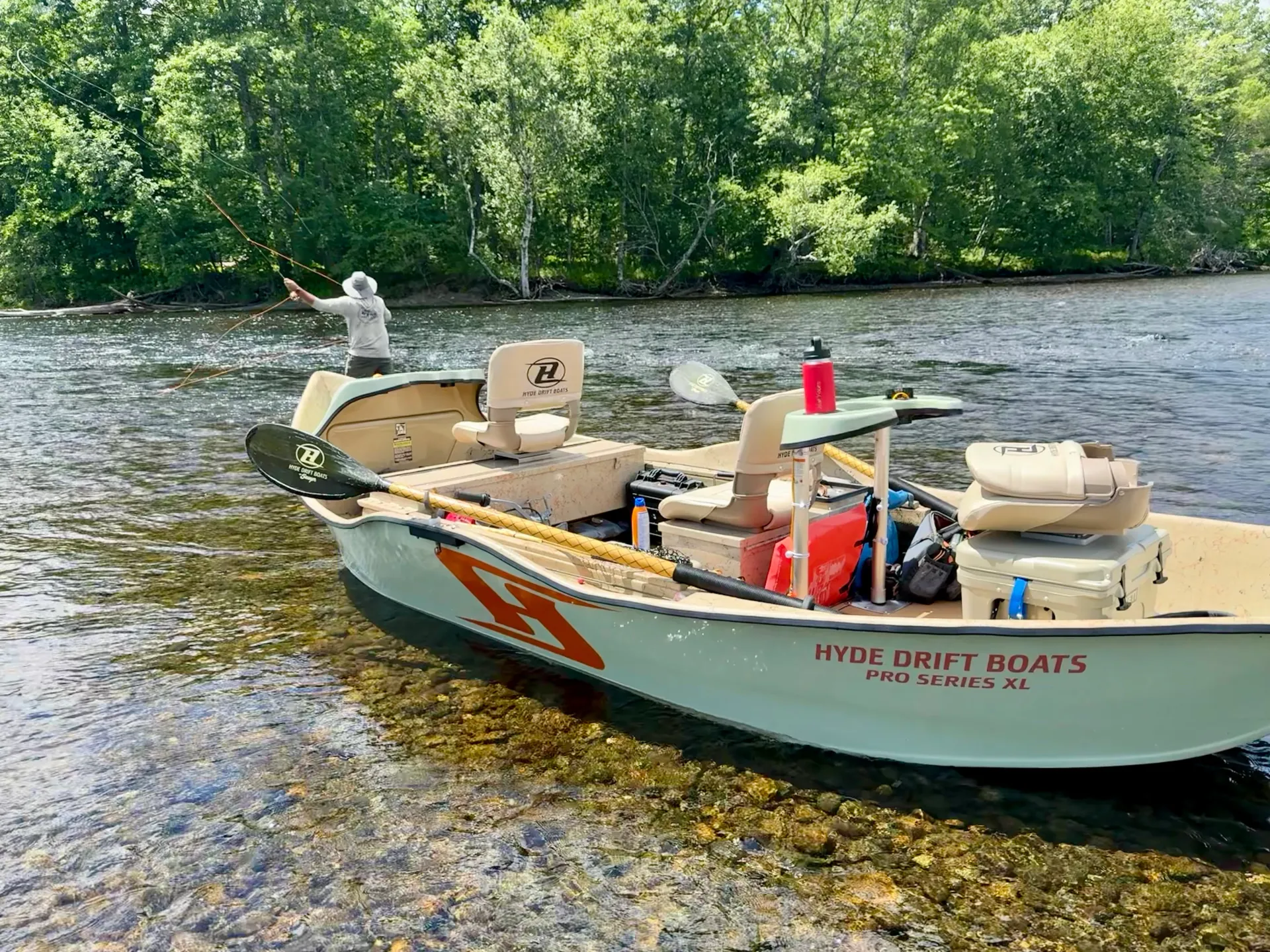
Maple Pond Outdoors uses specialized drift boats to navigate rugged, boulder-strewn rivers and reach stretches where shore access may be limited or unavailable. Proper boat positioning also allows anglers to work current seams, ledges, deep pools, and other productive structure with greater precision.
A Smallmouth Bass Fishing Guide Maine experience also allows the approach to change with water temperature, river flow, weather, forage, and fish activity. Instead of relying on one technique, anglers can adjust flies, lures, depth, and presentation as conditions develop, creating a more focused and productive day on Maine's smallmouth waters.
Conclusion
Successful Maine smallmouth fishing comes down to reading the water and adjusting to what the fish are doing. River structure, current, water temperature, seasonal movement, forage, and presentation all influence where bass hold and how they respond. A bounced Ned rig around a rocky ledge may produce when fish are holding deeper, while a carefully placed streamer or popper can become more effective when bass move shallow and feed actively. Maine's rivers can change throughout the day, making flexibility an important part of the experience. If you are ready to put these strategies into practice, book a smallmouth bass fishing trip with Maple Pond Outdoors and experience Maine's freshwater smallmouth fishery firsthand.
FAQs
1. Where is the best smallmouth bass fishing in Maine?
Maine's Penobscot, Kennebec, Androscoggin, and St. Croix Rivers offer productive smallmouth fishing, along with waters such as Big Lake and the Belgrade Chain of Lakes. River structure, current, water temperature, and seasonal conditions all influence where bass hold.
2. What is the best time for smallmouth bass fishing in Maine?
Late June through August generally offers consistent smallmouth action as water temperatures support active feeding. September and October can provide opportunities for larger bass as cooling water encourages fish to feed heavily before winter.
3. What rivers have smallmouth bass in Maine?
The Penobscot, Kennebec, Androscoggin, and St. Croix Rivers are notable Maine smallmouth waters. Each offers different combinations of boulder fields, ledges, gravel runs, current seams, deep pools, and other habitat where bass can hold.
4. What lures work best for Maine smallmouth bass?
Effective options include 3- to 4-inch stickbaits, Ned rigs, tube jigs, crankbaits, spinnerbaits, and topwater lures. The right choice depends on water depth, clarity, current, light conditions, and how actively bass are feeding.
5. Can you fly fish for smallmouth bass in Maine?
Yes. Smallmouth Bass Fly Fishing Maine can include streamers, poppers, and articulated baitfish patterns. A 6 or 7-weight rod with an appropriate floating, intermediate, or sink-tip line can cover different surface and subsurface presentations.
6. What flies are good for smallmouth bass in Maine?
Clouser Deep Minnows, Bob's Bangers, Game Changers, Booglebugs, foam poppers, and Dahlberg Divers are useful patterns. Anglers can also match flies to local forage such as crayfish, silversides, golden shiners, and juvenile yellow perch.
7. Where should you look for smallmouth bass in Maine rivers?
Focus on current seams, eddies, ledges, drop-offs, gravel flats, boulder fields, and deep pools. Bass often position where slower water meets stronger current, allowing them to conserve energy while remaining close to passing food.
8. What water temperature is best for smallmouth bass in Maine?
Smallmouth behavior changes significantly as water warms and cools. Spring fishing can improve as temperatures rise from roughly 45°F toward 60°F, while summer activity is strong around 65°F to 75°F and fall brings renewed feeding as water cools.
9. Is wade fishing or boat fishing better for Maine smallmouth bass?
Both can be effective in the right setting. Wade fishing works well on smaller, shallower rivers, while drift boats and jet boats allow anglers to cover larger rivers and reach stretches with limited shore access.
10. Can I book a guided smallmouth bass fishing trip in Maine?
Yes. A guided trip can provide local knowledge of river access, current seams, seasonal fish positioning, boat positioning, and changing water conditions. Professional guidance can also make it easier to adjust flies, lures, and techniques during the day.